
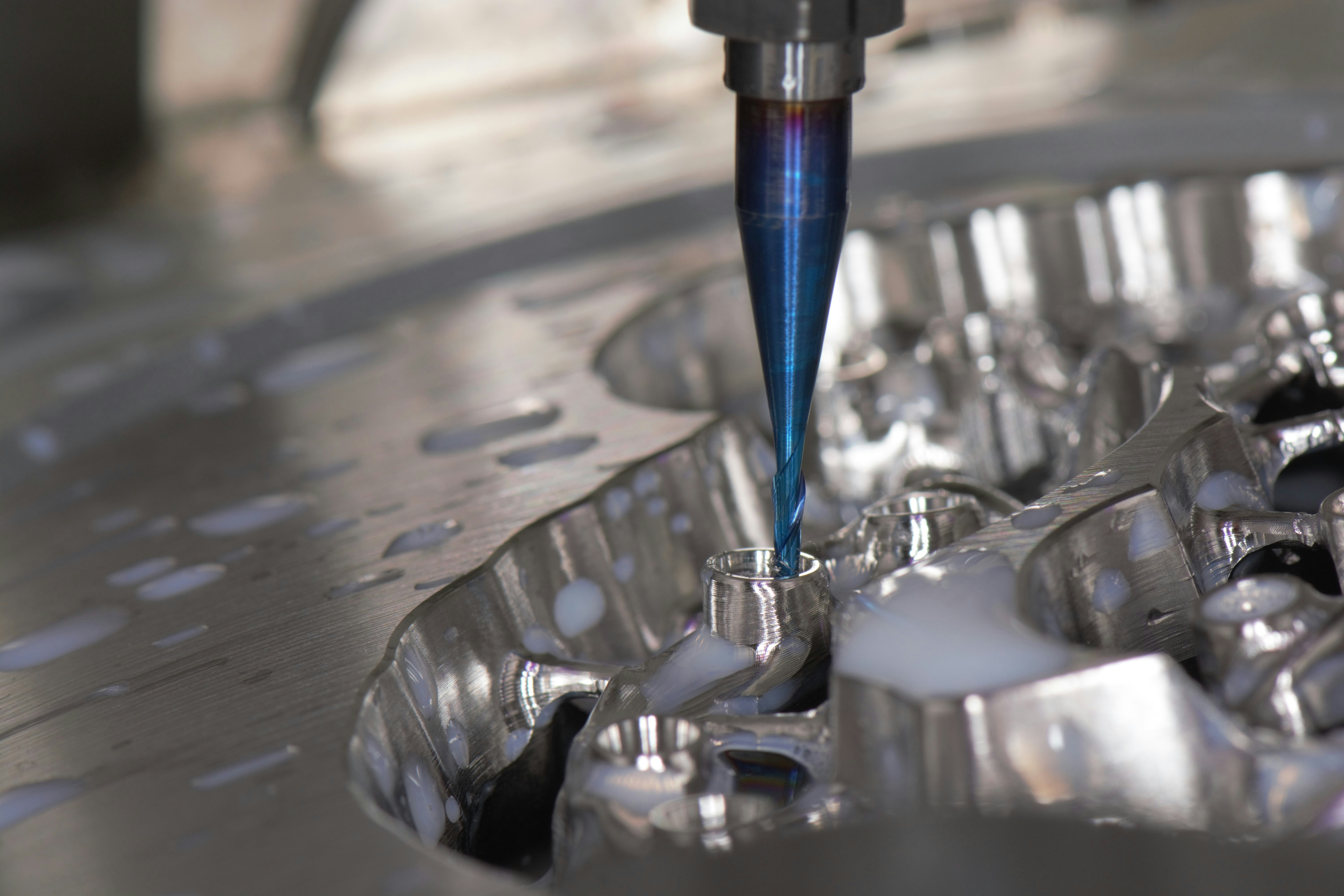
Introduction to CNC Machines
CNC (Computer Numerical Control) machines represent a transformative technology in the realm of manufacturing, enabling a high degree of precision, efficiency, and automation. These machines utilize computer programming to control their movements and operations, allowing for the intricate execution of design specifications. This automation has not only increased productivity but has also significantly reduced human error, making CNC technology indispensable in various industries, including aerospace, automotive, and electronics.
The fundamental working principle of CNC machines revolves around the translation of precise design specifications into actionable code, typically in the form of G-code or M-code. This code directs the machine’s movements along multiple axes, enabling it to cut, mill, drill, or engrave materials with extraordinary accuracy. Unlike traditional machining methods that often require manual operation, CNC machining is predominantly automated. Operators input initial design parameters, and the machine performs the task with minimal human intervention, resulting in consistent output quality.
In contrast to traditional methods, CNC technology offers several advantages. Traditional machining relies heavily on the skill of the operator and manual setup, which can lead to variations in production quality and extended lead times. CNC machines, however, can work continuously, reproduce complex designs with repetitive accuracy, and easily switch between different tasks thanks to their programmable nature. Moreover, the integration of CNC machines into manufacturing processes allows for time-saving efficiencies and the flexibility to accommodate a wide range of materials and production runs.
As the landscape of manufacturing continues to evolve, understanding the components and functionalities of CNC machines becomes crucial. This knowledge not only fosters better equipment maintenance and usage but also enhances the ability to implement innovative manufacturing solutions effectively.
Main Parts of CNC Machines
CNC machines, which stand for Computer Numerical Control machines, are intricate industrial tools that automate the precise manufacturing of parts. At the heart of these machines are several key components working cohesively to create high-quality products. Understanding the main parts of CNC machines is essential for grasping how they function and contribute to modern manufacturing processes.
The frame of the CNC machine serves as its foundational structure, designed to support all other components. It is typically made from rigid materials like steel or cast iron, which provide stability and minimize vibrations during operation. This stability is crucial for achieving the level of precision required in CNC machining. Additionally, robust frames are engineered to withstand the forces exerted during cutting processes, ensuring the durability and longevity of the equipment.
Another critical component is the spindle, which houses the cutting tool and is responsible for its rotation. Spindles come in various configurations, including high-speed and heavy-duty designs, tailored for different material processing needs. This rotating action is vital as it allows the cutting tool to engage with the workpiece, shaping it according to programmed specifications. The power and speed of the spindle directly impact the efficiency and quality of the machining process.
Control systems, often regarded as the “brain” of CNC machines, play a pivotal role in executing machining tasks. These systems use software and hardware to convert design specifications into precise movements of the machine. Input from operators is processed through a series of algorithms that dictate the actions of the motors and other mechanical components, ensuring that the desired outcomes are achieved with exceptional accuracy. The integration of control systems with the mechanical parts is fundamental, as it allows for seamless operation and efficient workflow in production environments.
Control Systems Explained
Control systems play a crucial role in the operation of CNC (Computer Numerical Control) machines, acting as the brain that processes commands and dictates the movements of the machine’s components. The most common languages used in CNC programming are G-code and M-code. G-code (Geometric Code) primarily provides the machine with instructions regarding movement, including coordinates and speed. Meanwhile, M-code (Miscellaneous Code) handles miscellaneous functions, such as tool changes or stopping the machine. The controller interprets these codes and translates them into mechanical actions, allowing precision in machining operations.
Understanding how these codes are utilized is essential for effective CNC operation. When a programmer inputs instructions using G-code, the CNC controller translates these commands into actionable movements that the machine executes. For example, G-code may direct the machine to move to a specific point in a 3D space with a predetermined speed. Conversely, M-code instructs the CNC machine to perform specific tasks beyond mere movement, enhancing the overall machining process. This division of tasks ensures that the machining operations are efficient and accurate.
Another vital aspect of control systems in CNC machines is the difference between open-loop and closed-loop systems. Open-loop systems operate without feedback; the controller sends commands to the machine without verifying their execution. This setup is simpler and may be suitable for less complex tasks. In contrast, closed-loop systems incorporate feedback mechanisms that continuously monitor the machine’s performance. By using sensors that detect the actual position of the tool, closed-loop systems can adjust operations in real time, significantly improving precision and reliability. Understanding these control mechanisms helps operators select the right CNC technology for their specific applications, increasing productivity and efficiency.
Motion Components: Servos and Stepper Motors
CNC machines rely heavily on precise motion components to achieve accurate machining results. Among these components, servos and stepper motors play pivotal roles in controlling the movement of machine parts. Each type of motor offers distinct advantages and limitations, making them suitable for various applications within the realm of CNC machining.
Stepper motors operate on the principle of discrete steps, allowing for precise angular positioning. They are particularly valued for their simplicity and reliability. When controlled correctly, stepper motors can achieve high levels of precision, usually desired in applications such as 3D printing and engraving. However, while stepper motors perform well at lower speeds, they may struggle with torque and performance at higher speeds, leading to potential skipping of steps under heavy loads.
On the other hand, servo motors utilize closed-loop control, which allows them to adjust their movements based on real-time feedback from sensors. This feature enhances their performance, making servo motors ideal for applications requiring higher speeds, greater torque, and improved efficiency. They excel in complex machining tasks, such as milling and turning, where precision and speed are critical. However, servo systems tend to be more intricate and costly, requiring additional components like encoders and controllers, which can increase the overall complexity of CNC machine setup.
In summary, both servos and stepper motors offer unique advantages that cater to different CNC machining needs. While stepper motors are suitable for straightforward tasks due to their compact nature, servo motors provide greater flexibility and efficiency for more demanding applications. Therefore, understanding the characteristics and functionalities of these motion components is essential for selecting the appropriate motor type for specific CNC machine tasks, ensuring optimal performance and reliability in machining operations.
Tool Holding and Tool Change Mechanisms
Tool holding devices are critical components in CNC machining, as they ensure precision and stability during the machining process. Among the most commonly used tool holders are collets, chucks, and tool changers. Each of these devices plays a vital role in securely holding tools and facilitating efficient tool changes, which can significantly impact production efficiency and machining accuracy.
Collets are designed to hold cylindrical tools firmly in place, providing a high degree of concentricity. They work by tightening around the tool shank when a drawbar or other fastening mechanism is engaged. This design allows for quick tool changes while maintaining the requisite precision needed for detailed machining. Collets are particularly effective for smaller tooling applications and are favored for their repeatability and ease of use.
Chucks are another common tool holding device, particularly utilized in CNC lathes. Unlike collets, chucks grip the tool using three or more jaws that can be adjusted symmetrically or asymmetrically. This feature not only accommodates various tool sizes but also offers greater flexibility in holding different shapes. Chucks are especially beneficial in applications requiring heavy and irregularly shaped tools, where the added grip strength ensures optimal performance during machining.
Tool changers streamline the machining process by automating the exchange of tools without manual intervention. These devices are essential in environments that require multi-tool setups, as they minimize downtime between operations and enhance productivity. Advanced CNC machines typically integrate automatic tool changers, which can swiftly replace worn or different tooling while maintaining accuracy and efficiency. Thus, the interplay between tool holding devices and tool changers significantly enhances the overall functionality of CNC operations, making them indispensable in modern machining processes.
Feedback Systems: Encoders and Sensors
Feedback systems in CNC machines play a crucial role in ensuring accuracy and repeatability during machining processes. Encoders and sensors are the primary components of these feedback systems, providing essential data that allows the machine to adjust and refine its operations based on real-time conditions. Understanding these components is vital for anyone looking to maximize the performance and precision of CNC machinery.
Encoders are devices that convert information about the position or movement of a machine component into usable data. There are two main types of encoders: absolute and incremental. Absolute encoders provide a unique position value in a single rotation, making them ideal for applications requiring high precision. Conversely, incremental encoders track the movement of the machine and determine its position based on changes from a reference point. Each type of encoder has its applications, depending on the level of accuracy required, the motion control strategy, and the specific characteristics of the CNC operation.
Sensors, on the other hand, complement encoders by detecting changes in the environment or machine performance. Common sensor types include proximity sensors, temperature sensors, and pressure sensors. Proximity sensors detect the presence of objects without physical contact, which is essential for automated environments. Temperature and pressure sensors monitor the conditions within the machine, allowing for the identification of potential issues before they lead to equipment failure. These sensors work in conjunction with encoders to provide comprehensive feedback that enhances the overall control and reliability of CNC machines.
In conclusion, the integration of encoders and sensors within CNC feedback systems is fundamental to achieving high precision in machining processes. By understanding how these components operate and interact, operators can better maintain their equipment, optimize machining operations, and ensure consistent quality in production.
Cooling Systems and Their Importance
In the realm of CNC machining, cooling systems play a pivotal role in ensuring optimal operational efficiency and longevity of both tools and materials. The heat generated during the cutting process can significantly affect the performance and life span of CNC tools. Therefore, an effective cooling system is crucial for dissipating heat and maintaining an ideal working temperature.
There are various types of coolants used in CNC machining, which can be broadly categorized into liquid coolants and gas coolants. Liquid coolants, such as water-soluble oils and straight oils, are often favored due to their ability to provide superior cooling and lubrication. Water-soluble oils, mixed with water, lower the surface tension between the tool and material, reducing friction and heat generation. Straight oils, on the other hand, offer excellent lubrication properties, making them ideal for high-performance applications. Gas coolants, like compressed air, are less common but can be employed in specific applications where minimal material buildup or contamination is critical.
The methods employed for applying coolants also vary and can include flood cooling, mist cooling, and through-tool cooling. Flood cooling involves a steady stream of coolant directed over the cutting area, which ensures consistent cooling and chip removal. Mist cooling delivers fine droplets of coolant to the cutting zone, providing sufficient cooling while reducing coolant use. Lastly, through-tool cooling utilizes internal channels in the tool to deliver coolant directly to the cutting edge, offering precise cooling in high-temperature applications.
The significance of adequate cooling cannot be overstated, as it not only enhances tool longevity but also preserves the integrity of the machined material. Excessive heat can lead to thermal deformation, altering dimensions and reducing the overall quality of the finished product. Furthermore, environmental considerations surrounding coolant usage have gained prominence; industries are increasingly exploring biodegradable and less harmful coolant options to reduce ecological impact.
Maintenance of CNC Machine Parts
Maintaining CNC machine parts is pivotal in ensuring optimal performance and longevity. A well-maintained CNC machine not only minimizes downtime but also enhances production efficiency and component accuracy. Regular maintenance checks should be conducted to identify wear and tear before it escalates into significant problems. Operators should develop a routine for inspecting critical components such as spindles, bearings, and drive motors to ensure they are functioning correctly.
Cleaning CNC machine parts is another essential aspect of maintenance. Debris, chips, and coolant residues can accumulate, leading to malfunction or decreased precision. It is advisable to use appropriate cleaning agents and tools, ensuring that delicate components are not damaged during the cleaning process. A systematic cleaning schedule can be developed based on the machine’s usage frequency and type of materials being processed.
Lubrication of CNC machine parts is crucial for their smooth operation. Proper lubrication reduces friction and heat generation, which can lead to premature wear. Operators should follow manufacturer recommendations regarding lubrication types and intervals to keep all moving parts lubricated adequately. Employing automatic lubrication systems can further enhance maintenance by ensuring consistent application of lubricants.
Replacement schedules for various components, such as tool holders and clamping devices, should be adhered to diligently. Having a predetermined timeline for replacing worn-out parts helps in maintaining the overall efficiency of the CNC machinery. Additionally, keeping an inventory of critical spare parts can minimize machine downtime due to unexpected breakdowns.
Incorporating these best practices into a comprehensive maintenance program will lead to improved performance and longer life for CNC machine parts. This ensures that production remains efficient and reduces the risks associated with machine failure, ultimately contributing to the success of manufacturing operations.
Future Trends in CNC Machine Parts
As the manufacturing landscape continues to evolve, the CNC (Computer Numerical Control) industry is increasingly embracing technological advancements that pave the way for enhanced efficiency and precision. One significant trend is the rapid integration of smart technologies into CNC machine parts. By utilizing the Internet of Things (IoT), manufacturers can now implement real-time data monitoring and analysis, ensuring optimal machine performance and reducing downtime. These smart machines can communicate with one another, creating a seamless production workflow and allowing for predictive maintenance, which helps to mitigate potential issues before they escalate.
Automation is also making significant strides within the CNC sector. Automated systems and robotics are being integrated more frequently in machining processes, resulting in greater accuracy and reduced labor costs. This shift not only streamlines production line efficiency but also minimizes human error—an ongoing challenge in manufacturing. Automation enhances the capabilities of traditional CNC machines, as they can be programmed to handle complex tasks with precision and consistency.
Alongside these smart technologies and automation, advancements in material selection are playing a crucial role in the development of CNC machine parts. Manufacturers are exploring innovative materials that offer improved durability, strength, and versatility. Metals such as titanium and advanced composites are becoming more prevalent in CNC machining because of their lightweight yet robust characteristics. This progress ensures that CNC machines can cope with increasingly demanding applications across various industries, including aerospace, automotive, and medical sectors, where the need for high-performance materials is paramount.
In conclusion, the future of CNC machine parts is set to be shaped by smart technologies, automation, and advanced materials. By staying abreast of these trends, manufacturers can ensure their operations remain competitive in a rapidly changing market, ultimately leading to enhanced productivity and innovation in CNC machining processes.